
Celebrating the Selection of Groundbreaking Initiatives for the Arctic’s Future.
Announcing the Conclusion of Open Call #3
After a highly competitive and inspiring Open Call #3, the Arctic Phi-Lab Norway is excited to announce the official acceptance of two pioneering projects into our collaborative network. These projects, selected from a pool of outstanding submissions, exemplify the vision, scientific excellence, and innovative spirit that is essential for advancing earth observation and environmental solutions in the Arctic.
Welcome to the New Projects
We are proud to introduce the following projects, each set to make significant contributions to Arctic safety, navigation, and stewardship:
SIGRI: Satellite-based GNSS Interference Detection and Localisation
Led by Testnor, in collaboration with NTNU’s SmallSat Lab and the Norwegian Defence Research Establishment (FFI), SIGRI addresses one of the fastest-growing threats to modern navigation infrastructure. Global navigation satellite systems (GNSS) — including GPS and Galileo — have become part of the invisible backbone of modern society, guiding ships and aircraft, synchronising emergency services, and keeping critical infrastructure running. When these signals are disrupted by jamming or spoofing, the consequences can range from minor positioning errors to serious safety and security incidents. SIGRI aims to make such interference visible and traceable from space, in real time.
By moving signal processing onboard the satellite itself, SIGRI will deliver detection and localisation of GNSS interference as it happens — not after the fact. This capability is particularly critical for the Arctic, where maritime and air activity continues to grow and where interference incidents around Norwegian airports and coastlines are already being recorded.
Key Features:
- Real-time onboard detection and localisation of GNSS interference from space
- Software-defined radio and onboard data processing tailored for small satellite missions
- Verification through dedicated test scenarios designed and transmitted by FFI
- Broad applications across aviation, maritime, critical infrastructure, emergency services, and defence
SIGRI’s acceptance into Arctic Phi-Lab reflects the program’s commitment to space-based solutions that address emerging threats to safety and security in the High North. By providing operators, authorities, and industry with a real-time picture of where interference is occurring, SIGRI has the potential to reshape how the world monitors and responds to one of the most pressing challenges in satellite navigation today.
ICEPRESS: Ice Pressure Retrieval for Sea Ice Services
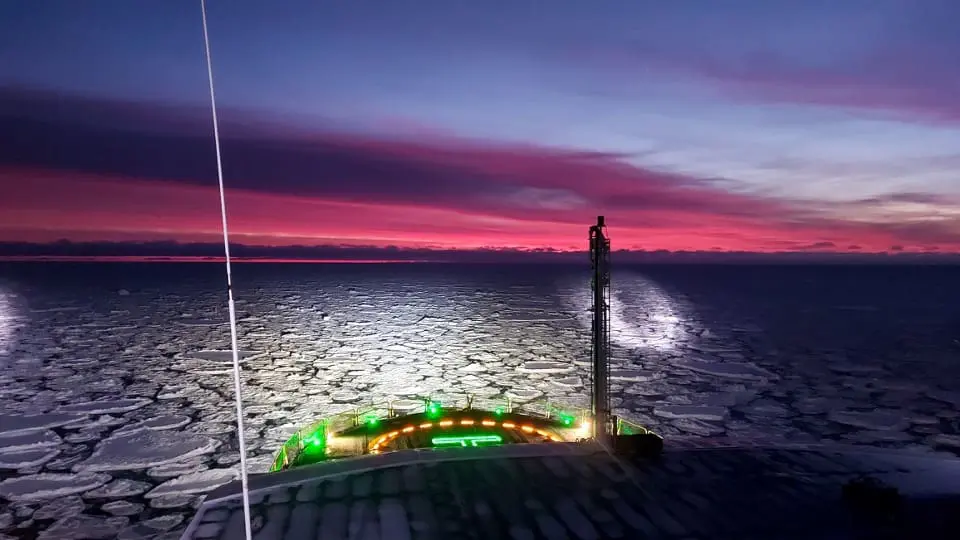
The Nansen Environmental and Remote Sensing Center (NERSC), together with partners C-CORE, Polar View, and Drift+Noise Polar Services, is set to develop the world’s first operational sea ice pressure forecasting service — a long-awaited tool that promises to make ship navigation in Arctic waters significantly safer. When ships sail through ice-covered waters, one of the most important and least visible dangers is the pressure within the ice itself. Wind and ocean currents constantly push ice floes together, and the forces that build up between them can make passage difficult or even deadly. Yet today, captains and ice navigators have no direct way of knowing where this pressure is building. ICEPRESS changes that.
Key Features:
- First-ever operational sea ice pressure forecasting service, built on NERSC’s world-leading neXtSIM sea ice model
- High-resolution satellite-based ice drift products from C-CORE integrated into pressure forecasts
- Delivery through Polar View’s widely used navigation platforms and Drift+Noise’s IcySea polar navigation software
- Collaboration with national ice services, the International Ice Charting Working Group (IICWG), and onboard trials on Arctic vessels including Kronprins Haakon
The project team expects ICEPRESS to reduce delays in heavy ice by 5–10% and cut ice-related damage claims by 10–15%, generating concrete value for commercial shipping, tourism, fisheries, research vessels, and national ice services. For the fishing boats, tourism vessels, supply ships, and research expeditions that depend on safe Arctic passage, reliable ice pressure information is both a safety tool and a strategic advantage. Combined with the environmental gains from smarter, more fuel-efficient routing, ICEPRESS represents a major step forward for sustainable and safe Arctic operations.
Looking Ahead: A Collaborative Future
The selection and support of these new projects reflects the Arctic Phi-Lab’s dedication to fostering meaningful innovation in response to the complex challenges facing the Arctic. By bringing together leading expertise from research institutions, industry, and authorities, Arctic Phi-Lab Norway continues to drive impactful earth observation solutions for the Arctic. We extend a warm welcome to both new teams and look forward to the collaborative journey ahead. Stay tuned to www.arcticphilab.no for updates on these projects and our ongoing commitment to ensuring a resilient and thriving Arctic environment.
We extend our heartfelt congratulations and a warm welcome to Testnor and NERSC. We are excited to see these projects evolve and look forward to supporting your journey as part of the Arctic Phi-Lab.
For more information about the projects, companies and their work, please stay tuned to our webpage and follow future updates on the Arctic Phi-Lab Norway initiatives. If you or your company have an interesting project, please reach out and we will get in touch.
Welcome aboard!